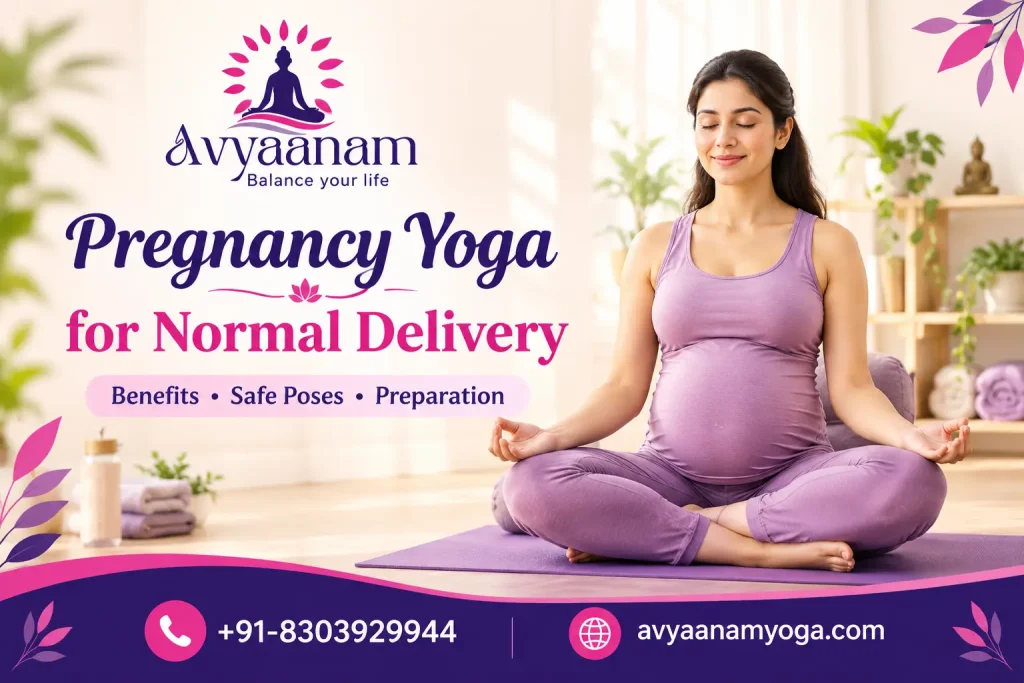
Pregnancy Yoga for Normal Delivery: Benefits, Poses and Preparation
Pregnancy yoga for normal delivery can be a helpful way for expectant mothers to support their physical comfort, emotional well-being, and confidence throughout pregnancy. Pregnancy brings many changes to the body, and gentle movement, breathing awareness, and relaxation can help women adapt to these changes while preparing for childbirth. With appropriate guidance and approval from a healthcare professional, prenatal yoga may become a valuable part of a healthy pregnancy routine.
Every expecting mother wants to feel prepared for labour and childbirth. Although no exercise or yoga practice can guarantee a vaginal delivery, suitable prenatal yoga may help maintain mobility, manage everyday stress, and develop greater awareness of the body. At Avyaanam Yoga, pregnancy wellness can be approached through mindful movement, comfortable breathing, and relaxation practices tailored to the needs of expectant mothers.
Also Read: Pregnancy Yoga in Noida
What Is Pregnancy Yoga for Normal Delivery?
Pregnancy yoga is a form of prenatal exercise that combines gentle physical movements, breathing techniques, relaxation, and mindfulness. Unlike regular yoga classes, prenatal yoga should be adapted to the physical changes and safety considerations associated with pregnancy.
The purpose is not to force the body into difficult poses or guarantee a particular delivery outcome. Instead, the focus is on maintaining comfortable movement, developing body awareness, and supporting emotional well-being.
A suitable prenatal yoga routine may help expectant mothers:
- Maintain flexibility and comfortable mobility.
- Improve awareness of posture and body alignment.
- Practise gentle breathing and relaxation techniques.
- Manage everyday stress and promote emotional balance.
- Prepare mentally for the changes associated with labour and motherhood.
Every pregnancy is different. Therefore, the right yoga routine depends on the mother’s health, trimester, fitness level, and individual medical needs.
Benefits of Yoga During Pregnancy
Practising pregnancy-appropriate yoga may offer several benefits when performed safely and under suitable guidance.
1. Supports Flexibility and Mobility
As pregnancy progresses, the growing abdomen and changes in posture can place additional demands on the back, hips, and legs. Gentle prenatal movements may help maintain comfortable mobility and reduce feelings of stiffness.
A qualified prenatal yoga instructor can suggest suitable modifications to help expectant mothers move comfortably without overstretching or putting unnecessary pressure on the abdomen.
2. Encourages Relaxation and Stress Management
Pregnancy can bring excitement as well as concerns about childbirth, parenting, and changing responsibilities. Relaxation techniques, mindfulness, and comfortable breathing may help women manage everyday stress.
Regular relaxation practice can also encourage expectant mothers to recognise tension in their shoulders, jaw, and other parts of the body and learn to release it gently.
3. Develops Breathing Awareness
Breathing awareness is an important component of labour preparation. Gentle breathing exercises can help women become more familiar with a comfortable breathing rhythm.
During labour, some women find controlled, comfortable breathing helpful for managing tension and coping with contractions. However, breathing practices should never feel forced. Avoid prolonged breath-holding and forceful techniques that cause discomfort or dizziness.
4. Supports General Physical Well-Being
Suitable physical activity during an uncomplicated pregnancy can support general fitness and well-being. Prenatal yoga may form part of a balanced activity routine alongside walking or other exercises recommended by a healthcare professional.
It is important to remember that yoga complements antenatal care rather than replacing medical check-ups or professional advice.
Yoga for Normal Delivery: Gentle Poses to Consider
Yoga for normal delivery should prioritise comfort, safe movement, and relaxation. The following practices may be appropriate for some pregnant women, depending on their health and stage of pregnancy.
1. Gentle Cat-Cow Movement
This movement involves slowly rounding and gently extending the spine while positioned on the hands and knees. It may help some women improve spinal mobility and manage back stiffness.
Keep the movement within a comfortable range. Avoid extreme arching, and use cushions or alternative positions if kneeling is uncomfortable.
2. Supported Butterfly Pose
Sit comfortably with your back supported and the soles of your feet near each other. Allow your knees to relax outward without pushing them toward the floor.
This gentle position may help maintain comfortable hip mobility. Stop if you experience pain, pelvic discomfort, or excessive stretching.
3. Comfortable Breathing Practice
Sit in a supported position and allow your breathing to remain slow and natural. Relax your shoulders and jaw while breathing comfortably through your nose if possible.
Practising for a few minutes may help develop breathing awareness and relaxation. Do not force deep inhalations or hold your breath.
4. Gentle Pelvic Floor Awareness
The pelvic floor muscles support the bladder, bowel, and pelvic organs. Learning how to contract and fully relax these muscles may be helpful during pregnancy and after childbirth.
A pelvic health physiotherapist or qualified professional can teach the correct technique. Pelvic floor training should be individualised, especially if you experience pelvic pain or difficulty relaxing these muscles.
5. Guided Relaxation
Rest in a comfortable, supported position and consciously relax different parts of your body. Cushions can provide support for the back, hips, and knees.
During later pregnancy, avoid lying flat on your back for extended periods if this causes discomfort or light-headedness. Side-lying relaxation may be more comfortable.
These poses are examples rather than a universal exercise plan. Consult your healthcare provider before starting prenatal yoga.
Pregnancy Exercises for Normal Delivery
Pregnancy exercises for normal delivery should support the mother’s health and comfort rather than attempt to guarantee a particular birth outcome.
For women with uncomplicated pregnancies, suitable physical activity may help maintain fitness, support mood, and make everyday movements more comfortable.
Depending on individual medical advice, a pregnancy activity routine may include:
- Walking: A simple way to maintain regular movement at a comfortable pace.
- Prenatal yoga: Gentle poses, mobility work, and relaxation techniques adapted to pregnancy.
- Pelvic floor exercises: Individualised training that includes both contraction and relaxation.
- Gentle stretching: Comfortable movements that avoid pain and excessive strain.
- Low-impact activity: Other suitable exercises recommended by a healthcare professional.
If you are new to exercise, begin gradually and avoid comparing your routine with someone else’s. Stay hydrated, avoid excessive heat, and stop if you feel unwell.
Seek prompt medical advice if exercise is followed by vaginal bleeding, fluid leakage, regular painful contractions, chest pain, dizziness, unusual shortness of breath, or other concerning symptoms. Follow your maternity team’s instructions regarding warning signs and exercise restrictions.
Natural Delivery Preparation: How to Prepare Your Body and Mind
Natural delivery preparation involves more than practising yoga poses. It includes physical well-being, emotional preparation, education, and regular antenatal care.
Here are some practical steps to consider.
Maintain a Suitable Activity Routine
Choose activities that match your fitness level and pregnancy needs. Consistency with comfortable, medically appropriate movement is generally more useful than occasional strenuous exercise.
Practise Relaxation Regularly
Spend a few minutes each day on comfortable breathing or guided relaxation. These practices may help you become more familiar with releasing tension.
Learn About Labour and Birth
Antenatal classes can explain the stages of labour, pain-relief options, birth preferences, and situations in which medical intervention may be recommended.
Understanding these topics can help reduce uncertainty and support informed decisions.
Attend Regular Antenatal Appointments
Your obstetrician or midwife can monitor your pregnancy and advise whether particular activities are suitable for you. Medical guidance is especially important if you have pregnancy complications or have been told to restrict physical activity.
Yoga During Pregnancy for Normal Delivery: Important Safety Tips
Yoga during pregnancy for normal delivery should always be adapted to the mother’s comfort and medical needs.
Keep these precautions in mind:
- Avoid hot yoga and environments that may cause overheating.
- Avoid advanced inversions, unstable poses, and movements with a high risk of falling.
- Do not force deep twists, excessive stretches, or movements that compress the abdomen.
- Avoid forceful breathing and prolonged breath-holding.
- Use cushions, chairs, or other supports when needed.
- Stop any movement that causes pain, dizziness, or unusual discomfort.
- Seek professional guidance before beginning a new exercise programme.
Some women need additional precautions or may be advised to avoid certain activities. Your healthcare provider should guide decisions about exercise during pregnancy.
Also Read: Garbh Sanskar for Pregnancy
Can Pregnancy Yoga Guarantee a Normal Delivery?
No. Pregnancy yoga cannot guarantee a vaginal delivery or eliminate the possibility of medical intervention.
The outcome of childbirth depends on several factors, including the baby’s position, the mother’s health, placental conditions, labour progression, and complications that may arise.
Some women who practise prenatal yoga have vaginal births, while others may require assisted delivery or a caesarean section. A caesarean birth may be the safest option in certain circumstances.
The main goal of prenatal yoga is to support physical activity, relaxation, and well-being—not to pressure women into achieving a particular type of birth.
Discuss your birth preferences with your obstetrician or midwife and remain open to medical recommendations that prioritise the safety of both mother and baby.
How Avyaanam Yoga Can Support Your Pregnancy Wellness Journey
At Avyaanam Yoga, expectant mothers can explore pregnancy-focused yoga and mindful practices as part of their pregnancy wellness journey.
A suitable programme should consider the mother’s trimester, previous exercise experience, comfort, and medical recommendations. Qualified guidance can help women understand appropriate modifications, practise comfortable breathing, and develop a relaxation routine suited to their needs.
Before enrolling in a prenatal yoga class, ask about the instructor’s training, trimester-specific modifications, and approach to individual medical concerns.
Remember that prenatal yoga is one part of pregnancy care. Regular antenatal appointments, balanced nutrition, appropriate physical activity, and guidance from qualified healthcare professionals remain important throughout pregnancy.
If you are considering prenatal yoga, speak with your healthcare provider and explore the pregnancy wellness options available through Avyaanam Yoga.
Frequently Asked Questions
1. When should I start pregnancy yoga?
Women with uncomplicated pregnancies may be able to begin suitable physical activity during pregnancy. Consult your healthcare provider first, particularly if you are new to exercise or have medical concerns.
2. Is pregnancy yoga safe during the third trimester?
Pregnancy-adapted yoga may be suitable for some women during the third trimester. Movements should be gentle, supported, and adapted to changes in balance and comfort.
3. Can yoga help reduce labour pain?
Yoga cannot guarantee reduced labour pain. However, breathing awareness and relaxation may help some women manage stress and cope with contractions.
4. Which yoga poses should I avoid during pregnancy?
Avoid poses that involve a high risk of falling, abdominal compression, intense twisting, excessive stretching, or discomfort. Hot yoga and forceful breathing practices should also be avoided.
5. Does pregnancy yoga increase the chances of normal delivery?
There is no guarantee that yoga will increase the likelihood of vaginal birth for an individual woman. Its role is to support appropriate activity, relaxation, and overall well-being.
Conclusion
Pregnancy yoga for normal delivery can be a useful part of a healthy pregnancy routine when adapted to individual needs and practised with appropriate guidance. Gentle movement, comfortable breathing, relaxation, and body awareness may help expectant mothers feel more comfortable and confident as they prepare for childbirth.
However, every pregnancy and birth experience is different. The safest approach combines suitable physical activity, regular antenatal care, informed birth planning, and advice from qualified professionals.
Explore pregnancy wellness with Avyaanam Yoga and discuss a suitable prenatal yoga routine with your healthcare provider. With realistic expectations and the right support, you can approach your pregnancy journey with greater awareness, confidence, and peace of mind.


About the Author
Prenatal yoga is one of the safest and most effective ways for expecting mothers to stay active and relaxed during pregnancy. These gentle yoga practices support physical health, emotional wellbeing, and help prepare the body for childbirth.