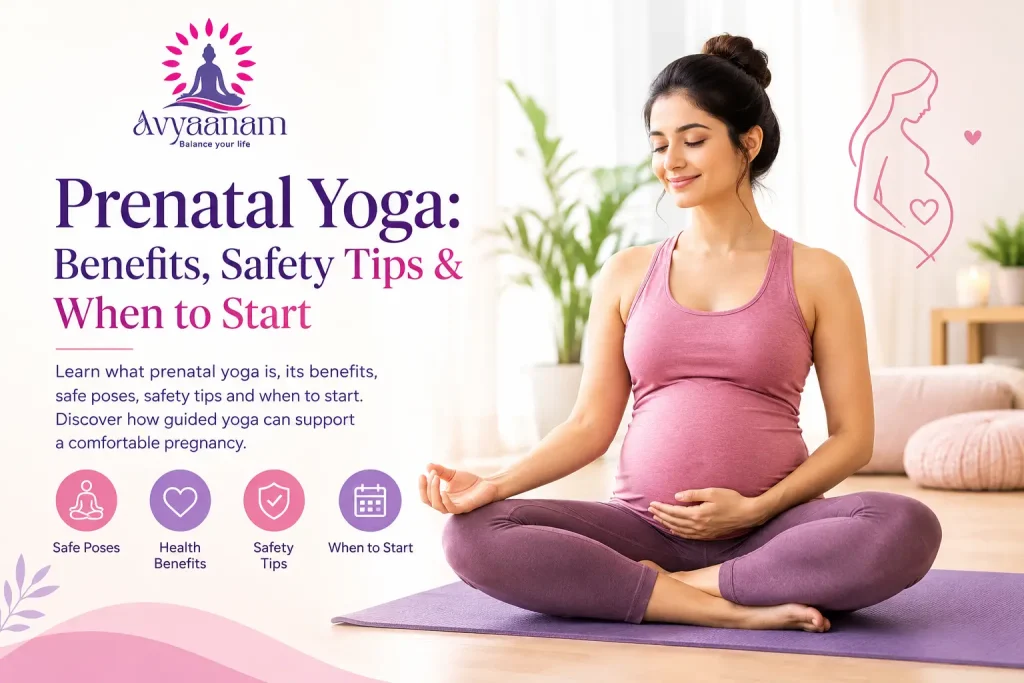
Prenatal Yoga: Benefits, Safety Tips and When to Start
Pregnancy is a special phase of life that brings many physical and emotional changes. As the baby grows, the mother’s body gradually adapts to changes in posture, balance, flexibility, energy levels and daily movement. Staying active in a safe and comfortable way can be an important part of pregnancy wellness for many women. Prenatal yoga is one gentle form of exercise that can help expecting mothers stay connected with their bodies while making time for movement, breathing and relaxation. Unlike a regular yoga practice, prenatal yoga is adapted to the changing needs of pregnancy. The focus is not on difficult poses or improving flexibility, but on comfortable movement and mindful practice.
For women who are new to yoga, it is important to understand how pregnancy can affect exercise and why certain movements may need to be modified. With appropriate guidance and medical advice when required, prenatal yoga can become a positive part of the pregnancy journey.
What Is Prenatal Yoga?
So, what is prenatal yoga?
Prenatal yoga is a modified form of yoga specifically designed for pregnant women. It generally includes gentle stretches, mobility movements, breathing exercises, relaxation and selected strengthening exercises that can be adapted as pregnancy progresses.
The practice is different from a general yoga class because the instructor takes the physical changes of pregnancy into consideration.
For example, as the abdomen grows, certain positions may become uncomfortable. Balance may also change, and some movements may need to be modified or avoided.
A prenatal yoga session may include:
- Gentle stretching
- Comfortable standing and seated movements
- Pregnancy-friendly mobility exercises
- Breathing practices
- Relaxation techniques
- Gentle strengthening
- Body-awareness exercises
The aim is to help women move comfortably rather than push their bodies to achieve advanced yoga positions.
When Is the Right Time to Start Prenatal Yoga?
There is no single starting point that is suitable for every woman.
Women who were already practising yoga before pregnancy may be able to continue with appropriate modifications after discussing their activity with their healthcare professional.
Women who are new to yoga can also explore pregnancy-specific classes, but they should start gradually rather than immediately taking up an intense routine.
Your stage of pregnancy, previous activity level and individual health should all be considered.
The first trimester can be accompanied by tiredness, nausea and changes in energy levels. During the second trimester, the growing abdomen may require modifications. By the third trimester, balance, comfort and mobility may become greater considerations.
For this reason, prenatal yoga should evolve with the pregnancy.
Benefits of Prenatal Yoga
When exercise is appropriate for an individual pregnancy, gentle yoga may offer several physical and emotional benefits.
Supports Gentle Physical Activity
Pregnancy does not mean that a woman needs to stop all physical activity. For women who are medically able to exercise, gentle yoga can provide an opportunity to keep moving without making the practice unnecessarily demanding.
Encourages Relaxation
Pregnancy can involve excitement, anticipation and sometimes stress. Breathing and relaxation are important parts of prenatal yoga and can provide a quiet period during the day.
Promotes Body Awareness
The body changes continuously during pregnancy. Yoga encourages women to pay attention to posture, breathing, balance and physical sensations.
This awareness can help women understand when they need to modify an exercise or take a break.
Supports Mobility
Gentle movements can help women maintain comfortable mobility as their posture and movement patterns change.
The objective is not to increase flexibility aggressively but to keep the body moving within a comfortable range.
Provides Time for Self-Care
Pregnancy can become busy with work, household responsibilities, appointments and preparation for the baby. A regular yoga session can provide dedicated time for relaxation and self-care.
Prenatal Yoga Poses: What Can You Practise?
When choosing prenatal yoga poses, comfort should always come first. The right movements can vary depending on your trimester and individual circumstances.
Cat-Cow
Cat-Cow is a gentle movement that can encourage spinal mobility.
Begin on your hands and knees and slowly move between a comfortable rounded-back position and a gentle arch. Coordinate the movement with natural breathing.
Avoid exaggerating the movement or creating discomfort.
Butterfly Pose
A comfortable seated Butterfly Pose may be included as part of a gentle prenatal routine.
Sit with the soles of your feet together and allow your knees to relax outward. Do not push the knees towards the floor.
Supported Squat
A supported squat may be appropriate for some women, particularly when performed with a stable chair or another suitable support.
The movement should remain controlled, and you should avoid going deeper than feels comfortable.
Gentle Standing Poses
Modified standing poses can help maintain mobility and stability.
As pregnancy progresses, use a wall or chair for additional support if your balance changes.
Side Stretch
A gentle side stretch can help maintain comfortable movement through the sides of the body.
The movement should be modified as the abdomen grows so that there is no unnecessary pressure or compression.
Relaxation Positions
Rest and relaxation are important parts of prenatal yoga.
A comfortable seated or pregnancy-appropriate supported position can be used to finish a session with gentle breathing and relaxation.
These examples are not a substitute for personalised instruction. A qualified prenatal yoga instructor can help determine suitable modifications for your stage of pregnancy.
What Should You Avoid During Prenatal Yoga?
Knowing what to avoid is just as important as knowing what to practise.
Avoid Deep Stretching
Pregnancy can affect joints and connective tissues. Avoid forcing your body into deep stretches or trying to achieve the flexibility you had before pregnancy.
Avoid High-Risk Balance Poses
As the centre of gravity changes, balance may become more difficult. Advanced poses that increase the risk of falling should be avoided or modified.
Avoid Forceful Twisting
Deep twists that create pressure around the abdomen should be avoided or adjusted.
Avoid Overheating
Pregnancy is not the time to push through excessive heat or intense exercise. Practise in a comfortable environment and take breaks when needed.
Be Careful With Back-Lying Positions
As pregnancy progresses, prolonged periods lying flat on the back may become uncomfortable. NHS guidance advises avoiding prolonged periods lying flat on the back after around 16 weeks.
A prenatal instructor can provide comfortable alternatives.
Safety Tips for Prenatal Yoga
Safety should remain the priority throughout your pregnancy yoga practice.
Listen to Your Body
Do not force yourself to complete a pose simply because it is part of the class. If something feels uncomfortable, stop or ask for a modification.
Keep Yourself Hydrated
Drink enough water and take regular breaks, particularly if the weather is warm.
Choose Appropriate Guidance
A general yoga instructor may not necessarily have the knowledge required to modify every exercise for pregnancy. Look for an instructor or programme with appropriate prenatal experience.
Inform Your Instructor
Let your instructor know how many weeks pregnant you are and inform them about any relevant restrictions or recommendations given by your healthcare professional.
Do Not Compare Yourself With Others
Every pregnancy is different. Two women at the same stage of pregnancy may have very different levels of energy, mobility and comfort.
Your practice should be based on your body, not someone else’s.
How to Choose Prenatal Yoga Classes
If you are considering prenatal yoga classes, look for a programme that is specifically designed for pregnancy rather than simply joining a general yoga session.
Consider whether the programme provides:
- Pregnancy-specific guidance
- Trimester-appropriate modifications
- Gentle and comfortable movements
- Breathing and relaxation practices
- Experienced instruction
- Options for beginners
- Individual attention where possible
Online sessions can also be convenient, especially for women who prefer practising from home. However, make sure the class is specifically designed for pregnancy and that you understand how to modify movements.
Prenatal Yoga for Beginners
You do not need to be an experienced yoga practitioner to explore prenatal yoga.
Beginners should start with simple movements and avoid trying advanced poses. The first few sessions should be focused on learning comfortable positions, breathing techniques and basic modifications.
A good prenatal programme should make you feel supported rather than pressured.
If you were not physically active before pregnancy, speak with your healthcare provider about starting a new exercise routine and begin gradually.
When Should You Stop Yoga?
Although gentle exercise can be appropriate for many women, certain symptoms should not be ignored.
Stop exercising and seek medical advice if you experience concerning symptoms such as significant pain, vaginal bleeding, dizziness, unusual breathlessness, fluid leakage, contractions or another symptom that worries you.
Women with pregnancy complications or specific medical restrictions should follow the advice provided by their obstetrician, midwife or healthcare professional.
Prenatal yoga should complement appropriate pregnancy care, not replace medical advice.
Making Prenatal Yoga Part of Your Pregnancy Journey
Pregnancy is not a time to compete with yourself or others. It is a time to understand your changing body and respond to its needs.
A well-guided prenatal yoga practice can provide an opportunity for gentle movement, relaxation, breathing and greater body awareness. The practice can also be adapted as you move from one trimester to another.
The most important thing is to choose a routine that respects your pregnancy, comfort level and individual health needs.
At Avyaanam Yoga, prenatal yoga is approached with a focus on mindful movement, breathing, relaxation and pregnancy-specific guidance. If you are looking to begin or continue your pregnancy yoga journey, you can learn more about the available programmes at https://avyaanamyoga.com.
Frequently Asked Questions
1. What is prenatal yoga?
Prenatal yoga is a modified form of yoga designed specifically for pregnant women. It focuses on gentle movement, comfortable stretching, breathing, relaxation and appropriate modifications according to the stage of pregnancy.
2. When should I start prenatal yoga?
The right time depends on your individual pregnancy and previous activity level. Women who are new to exercise should begin gradually and discuss starting a new exercise programme with their healthcare professional when appropriate.
3. Are prenatal yoga poses different from regular yoga poses?
Yes. Many movements may need to be modified during pregnancy to accommodate changes in balance, posture and the growing abdomen. Some poses may also need to be avoided.
4. Can beginners join prenatal yoga classes?
Yes, pregnancy-specific classes can be adapted for beginners. You do not need previous yoga experience, but it is important to choose an instructor who understands prenatal modifications.
5. Can I practise prenatal yoga at home?
Home practice can be convenient, but choose a pregnancy-specific programme rather than following an advanced general yoga routine. If you have any pregnancy-related concerns, seek professional medical advice before exercising.

About the Author
Prenatal yoga is one of the safest and most effective ways for expecting mothers to stay active and relaxed during pregnancy. These gentle yoga practices support physical health, emotional wellbeing, and help prepare the body for childbirth.