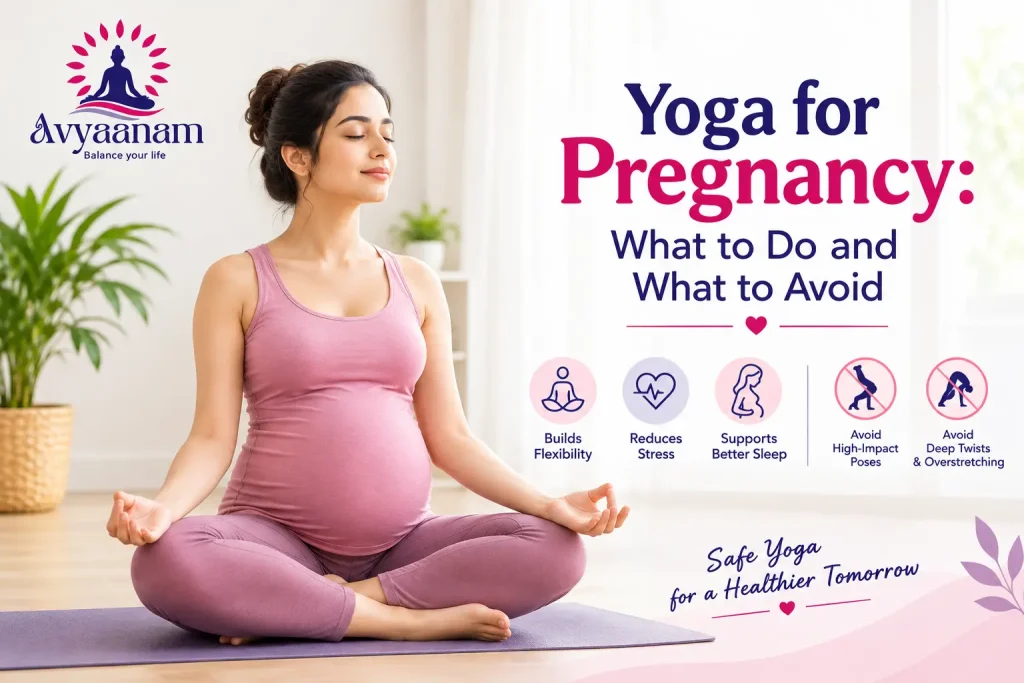
Yoga for Pregnancy: What to Do and What to Avoid
Pregnancy is a time of significant physical and emotional change. As the baby grows, a woman’s posture, balance, energy levels, flexibility, and movement patterns can change from one trimester to another. Staying active in a safe and comfortable way can help support overall wellbeing, and gentle yoga can be one option for women who have been advised that exercise is appropriate during pregnancy. Pregnancy yoga is different from a regular yoga practice. The aim is not to achieve difficult poses or improve flexibility as quickly as possible. Instead, the practice focuses on gentle movement, comfortable stretching, breathing, relaxation, and awareness of the changing body.
At Avyaanam Yoga, pregnancy-focused yoga can be approached as a mindful practice that helps expecting mothers stay connected with their bodies while adapting movements to their individual needs and stage of pregnancy.
What Is Pregnancy Yoga?
Pregnancy yoga, often called prenatal yoga, is a modified form of yoga designed to accommodate the physical changes that happen during pregnancy. It can include gentle stretches, mobility exercises, breathing practices, relaxation techniques, and carefully selected strengthening movements.
A suitable session may look very different from a traditional yoga class. As pregnancy progresses, certain positions may become uncomfortable or unsuitable, so movements need to be adjusted.
The most important principle is simple: comfort and safety should come before performance.
You do not need to be flexible or experienced in yoga to begin. A suitable prenatal practice can be adapted for beginners as well as women who practiced yoga before becoming pregnant.
Why Consider Yoga During Pregnancy?
Every pregnancy is different, and the benefits of exercise can vary from person to person. For women who are able to exercise, gentle yoga may provide an opportunity to move, relax, and develop greater awareness of their bodies.
Supports Gentle Movement
As pregnancy progresses, everyday activities can sometimes feel more demanding. Gentle yoga allows women to maintain movement without making the session unnecessarily strenuous.
Encourages Relaxation
Pregnancy can be an emotional as well as a physical experience. Breathing exercises and relaxation at the end of a yoga session can provide valuable time to slow down and focus on the present moment.
Helps Maintain Mobility
The body gradually changes as the pregnancy develops. Gentle mobility exercises can help women move comfortably while respecting their changing range of motion.
Supports Body Awareness
Yoga encourages women to pay attention to breathing, posture, balance, and physical sensations. This awareness can be particularly useful during pregnancy, when the body may feel different from week to week.
Creates Time for Self-Care
Pregnancy often involves appointments, responsibilities, work, and preparation for the baby. Setting aside time for gentle movement and relaxation can become a positive part of a woman’s routine.
What Should You Do During Pregnancy Yoga?
A good prenatal yoga practice should feel supportive rather than demanding. The following principles can help make sessions more comfortable.
1. Choose Gentle Movements
Avoid treating pregnancy yoga like an athletic challenge. Movements should be controlled, smooth, and comfortable.
If a particular position feels uncomfortable, there is no reason to force it. A qualified instructor can usually suggest a modification.
2. Pay Attention to Your Breathing
Breathing is an important part of yoga. Try to maintain a natural, comfortable breathing pattern throughout the session rather than holding your breath during challenging movements.
Gentle breathing and relaxation exercises can also make the practice feel calmer and more restorative.
3. Modify Your Practice as Your Pregnancy Progresses
A movement that feels comfortable during the first trimester may not feel appropriate later in pregnancy. As the abdomen grows, balance and mobility can change. Using a chair, wall, cushion, bolster, or yoga block may provide additional support when needed.
There is no need to maintain the same routine throughout all three trimesters.
4. Stay Hydrated and Take Breaks
Pregnancy can affect energy levels, so allow yourself to rest whenever necessary. Keep water nearby and avoid pushing through excessive fatigue.
A prenatal yoga session does not need to be long or intense to be beneficial.
5. Work Within Your Own Limits
Two pregnant women at the same stage can have completely different levels of comfort and mobility. Avoid comparing your practice with someone else’s.
Your body may also feel different from one day to the next. It is perfectly reasonable to make adjustments based on how you feel that day.
What Should You Avoid?
Knowing what not to do is an important part of a safe pregnancy yoga practice.
Avoid Deep or Forceful Stretching
Pregnancy can affect the body’s joints and connective tissues. Avoid pushing yourself into a deeper stretch simply because you were able to do it before pregnancy.
Stretch only to a comfortable level and never force a position.
Avoid High-Risk Balance Positions
Pregnancy can change your centre of gravity, particularly as the abdomen grows. This can affect balance.
Advanced balancing poses that increase the possibility of falling may need to be avoided or significantly modified. Support from a wall or chair may be appropriate for certain movements.
Be Careful With Positions That Feel Uncomfortable
If a position creates pressure, pain, dizziness, or discomfort, come out of it. There is no requirement to complete every pose in a class.
A prenatal yoga instructor should provide alternatives when necessary.
Avoid Overheating
Pregnancy is not the time to push through excessive heat or intense physical exertion. Practice in a comfortable environment and reduce the intensity if you begin feeling unusually hot, exhausted, or unwell.
Avoid Prolonged Flat-on-Back Positions Later in Pregnancy
As pregnancy progresses, lying flat on the back for extended periods may become uncomfortable for some women. NHS guidance advises avoiding prolonged periods lying flat on the back after around 16 weeks.
A qualified instructor can offer alternative positions that provide greater comfort.
What About Online Pregnancy Yoga?
Online classes can make yoga more accessible, particularly for women who prefer practicing from home. However, choosing the right class is important.
A general yoga video is not necessarily suitable for pregnancy. Look for sessions specifically designed for prenatal practice and taught by someone with appropriate knowledge of pregnancy modifications.
Before beginning an online session, consider:
- Is the class specifically designed for pregnancy?
- Does the instructor explain modifications?
- Is the practice suitable for your trimester?
- Are there options for beginners?
- Does the instructor encourage you to listen to your body?
If you have been advised to restrict physical activity or have concerns about your pregnancy, speak with your healthcare professional before beginning a new exercise routine.
Can Beginners Start Yoga During Pregnancy?
Women who have never practiced yoga before can often explore gentle prenatal yoga, provided exercise is appropriate for their individual pregnancy.
There is no need to start with advanced poses. A beginner-friendly session can focus on simple movements, comfortable positions, breathing, and relaxation.
Starting slowly is particularly important if you were not physically active before pregnancy. Your practice can gradually develop according to your comfort and your healthcare provider’s advice.
Finding the Right Pregnancy Yoga Class
When looking for a pregnancy yoga class, consider the instructor’s experience with prenatal practices rather than choosing a class simply because it is close to home.
A suitable program should understand that pregnancy is not the same for everyone. The instructor should be comfortable offering modifications and encouraging participants to rest when needed.
For women searching for a pregnancy yoga program near them, Avyaanam Yoga offers a pregnancy-focused approach that emphasizes mindful movement, comfort, breathing, and appropriate adaptations.
The goal should not be to perform perfect poses. It should be to create a practice that feels supportive throughout the changing stages of pregnancy.
When Should You Stop Exercising and Seek Medical Advice?
Exercise during pregnancy should always be approached according to individual circumstances.
Stop your session and seek medical advice if you experience concerning symptoms such as significant pain, vaginal bleeding, dizziness, unusual shortness of breath, or any other symptom that feels abnormal or worrying.
Women with pregnancy complications or specific medical conditions may need individualized exercise guidance. Always follow the advice provided by your obstetrician, midwife, or healthcare professional.
Making Yoga a Positive Part of Pregnancy
Pregnancy yoga is not about pushing the body further. It is about adapting movement to a body that is continuously changing.
Gentle stretching, mindful breathing, relaxation, and comfortable movement can create a calm space during a busy and transformative period of life. With appropriate modifications and professional guidance, yoga can become a meaningful part of a woman’s pregnancy wellness routine.
Whether you prefer attending a guided class or practicing through an online session, choose an approach that respects your stage of pregnancy, experience level, comfort, and individual health needs.
At Avyaanam Yoga, the focus is on creating a mindful and supportive yoga experience for women during pregnancy, with practices that can be adapted as their bodies change.
Frequently Asked Questions
Is yoga safe during pregnancy?
For many women with uncomplicated pregnancies, gentle and appropriately modified yoga can be part of an active lifestyle. However, every pregnancy is different. Speak with your healthcare professional if you have any concerns about starting or continuing exercise.
When can I start pregnancy yoga?
Some women practice yoga before pregnancy and continue with suitable modifications, while others begin after becoming pregnant. If you are new to exercise, start gently and discuss your plans with your healthcare provider when appropriate.
Can beginners do pregnancy yoga?
Yes, prenatal yoga can be adapted for beginners. You do not need previous yoga experience. A qualified instructor can introduce simple movements and modifications according to your stage of pregnancy.
Can I practice pregnancy yoga at home?
Home practice can be convenient, but make sure the class is specifically designed for pregnancy. Avoid following general or advanced yoga routines without understanding which movements may need modification.
What is the most important thing to remember?
Listen to your body. Pregnancy yoga should feel comfortable and supportive rather than painful or exhausting. When in doubt, stop and seek advice from your healthcare professional.

About the Author
Prenatal yoga is one of the safest and most effective ways for expecting mothers to stay active and relaxed during pregnancy. These gentle yoga practices support physical health, emotional wellbeing, and help prepare the body for childbirth.