PCOS Yoga: Best Yoga Poses and Exercises to Support Hormonal Wellness
Polycystic Ovary Syndrome (PCOS) is a common hormonal condition that can affect menstrual cycles, skin health, metabolism, and overall well-being. Many women also experience stress, fatigue, and challenges in maintaining a healthy lifestyle. Along with appropriate medical care, regular physical activity, balanced nutrition, and stress management can help support overall health. PCOS Yoga is one approach that women can consider as part of a consistent wellness routine. Yoga combines gentle movement, breathing techniques, and relaxation practices to support both physical and mental well-being. With regular practice, it may help some women manage stress, improve flexibility, and build healthier daily habits. Understanding how yoga fits into a PCOS management plan can help women choose a routine that suits their individual needs.
Also Read: Pregnancy Yoga: Benefits, Safety Tips & What to Avoid
What Is PCOS and Why Is Lifestyle Management Important?
PCOS is a hormonal and metabolic condition that may involve irregular periods, elevated androgen levels, acne, excess facial hair, or difficulties with ovulation. Not every woman experiences the same symptoms, and the condition can affect individuals differently.
Lifestyle management is an important part of caring for PCOS. Regular exercise, nutritious meals, adequate sleep, and stress management may support metabolic health and general well-being. Yoga for PCOS can complement these habits by offering a manageable form of movement that can be adapted to different fitness levels.
Yoga is not a cure for PCOS, and it cannot replace medical assessment or prescribed treatment. Women experiencing persistent irregular periods, significant pain, or other concerning symptoms should consult a qualified healthcare professional for personalized guidance.
How Can PCOS Yoga Support Overall Wellness?
Yoga can be a useful addition to a broader PCOS wellness routine because it combines movement with mindfulness. Its benefits depend on the individual’s health, the style of yoga, and how consistently it is practiced.
1. Helps Manage Everyday Stress
Living with PCOS can sometimes feel emotionally challenging. Concerns about menstrual cycles, skin changes, body image, or fertility may contribute to stress. Gentle yoga, mindful breathing, and relaxation exercises can help calm the mind and encourage a more balanced daily routine.
2. Encourages Regular Physical Activity
Consistency matters when building healthy habits. PCOS Yoga Exercises can offer a flexible way to stay active, especially for beginners who prefer low-impact movement. Yoga can be combined with walking, strength training, or other suitable physical activities to create a more complete fitness routine.
3. Supports Flexibility and Body Awareness
Regular yoga practice can improve flexibility, balance, and muscular endurance. It also encourages people to pay attention to their breathing, posture, and physical comfort. These skills can make exercise feel more approachable and sustainable.
4. Complements Metabolic Health Habits
Some research suggests that yoga may support aspects of metabolic health and stress management, although evidence specific to PCOS remains limited. Yoga should therefore be considered one component of a comprehensive approach that may include medical care, nutrition, sleep, and other forms of exercise.
Best Yoga for PCOS: Poses to Consider
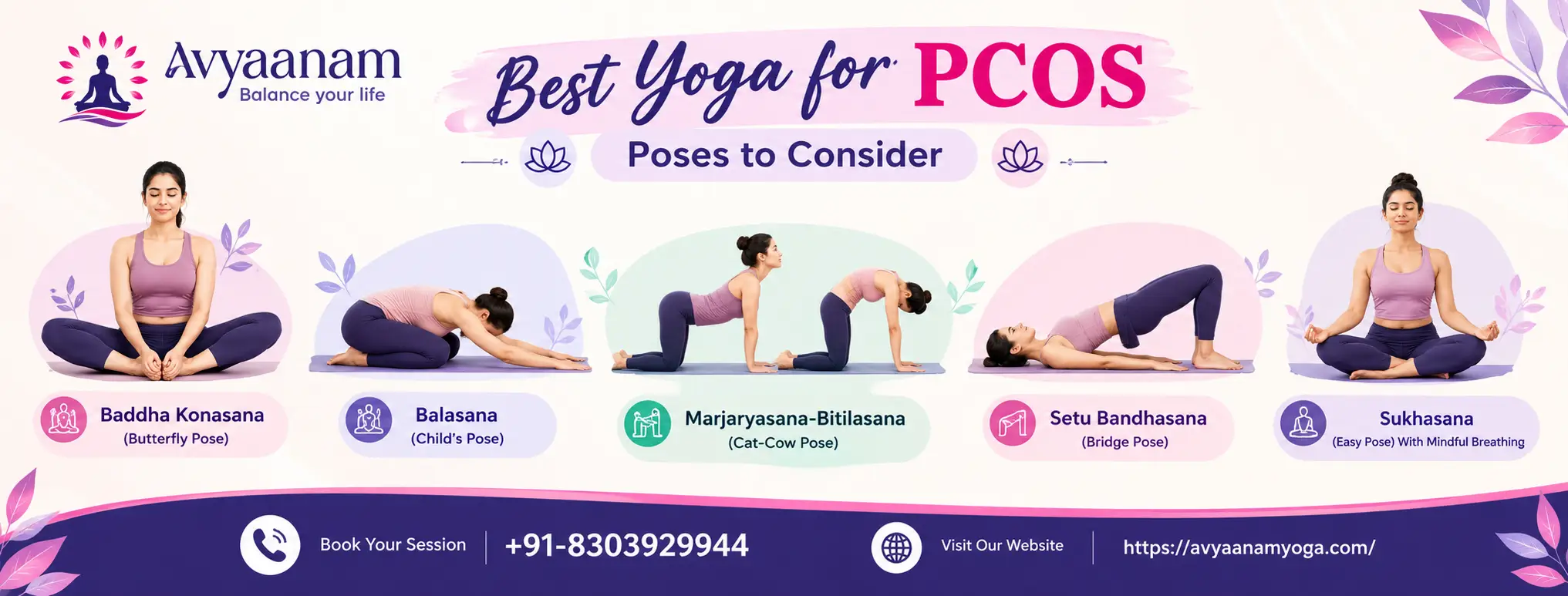
Choosing the best yoga for PCOS depends on your comfort, mobility, experience, and any other health conditions you may have. Beginners should start gently and learn correct technique before progressing to more challenging movements.
Here are some commonly practiced yoga poses that may be included in a suitable routine.
1. Baddha Konasana (Butterfly Pose)
Butterfly Pose involves sitting with the soles of the feet together and allowing the knees to move outward comfortably.
Potential benefits:
- Gently stretches the inner thighs and hips.
- Encourages relaxed, mindful breathing.
- Supports hip mobility and flexibility.
Sit upright and avoid pressing the knees down forcefully. This pose does not directly treat ovarian cysts or regulate hormones.
2. Balasana (Child’s Pose)
Child’s Pose is a gentle resting posture that can help you relax between movements.
Potential benefits:
- Encourages a slower breathing rhythm.
- Gently stretches the back and hips.
- Provides a comfortable resting position during practice.
Use a cushion beneath your hips or forehead if needed. If the position causes knee discomfort, choose a more comfortable alternative.
3. Marjaryasana-Bitilasana (Cat-Cow Pose)
Cat-Cow combines two gentle spinal movements performed on hands and knees.
Potential benefits:
- Encourages spinal mobility.
- Helps develop awareness of posture and breathing.
- Provides a gentle warm-up before other poses.
Move slowly and avoid forcing the back into an uncomfortable range.
4. Setu Bandhasana (Bridge Pose)
Bridge Pose involves lying on your back with bent knees and lifting the hips while keeping the feet grounded.
Potential benefits:
- Strengthens the gluteal muscles.
- Engages the muscles around the hips and trunk.
- Supports general muscular fitness.
Begin with a small lift and breathe normally. Avoid the pose if it aggravates back or neck discomfort.
5. Sukhasana (Easy Pose) With Mindful Breathing
Easy Pose is a comfortable seated position that can be used for breathing and meditation.
Potential benefits:
- Encourages relaxation.
- Helps develop attention to the breath.
- Can provide a simple way to include mindfulness in a daily routine.
Sit on a cushion if that makes the position more comfortable. If sitting cross-legged is difficult, use a chair instead.
These yoga poses for PCOS are examples of gentle movements that may suit some practitioners. No individual pose has been established as a treatment that cures PCOS, and a suitable routine should reflect each person’s needs.
How to Build a Beginner-Friendly PCOS Yoga Routine
Starting with a simple routine can make it easier to practice consistently. If you are new to yoga, begin with short sessions and increase the duration gradually according to your comfort.
A beginner-friendly session could include:
- Gentle warm-up: Spend a few minutes moving the shoulders, neck, and spine comfortably.
- Mindful breathing: Practice relaxed breathing without forcing deep inhalations or holding your breath.
- Gentle yoga poses: Include Butterfly Pose, Cat-Cow, and Child’s Pose if they feel comfortable.
- Simple strengthening: Consider a modified Bridge Pose or other suitable movements.
- Relaxation: Finish with a few minutes of quiet rest or guided relaxation.
You may begin with 10–20 minutes, several days a week, and adjust according to your fitness level. There is no single routine that works for every woman with PCOS.
If you have an injury, significant pain, dizziness, or another medical concern, seek professional guidance before beginning a new exercise program.
Why Consider PCOS Yoga Classes?
Learning yoga independently can be convenient, but some beginners benefit from professional instruction. PCOS Yoga Classes can provide structured sessions, guidance on posture, breathing techniques, and modifications for different abilities.
When choosing a class, consider the instructor’s qualifications, teaching experience, class size, and whether the sessions are appropriate for beginners. A supportive environment can make it easier to ask questions, learn at your own pace, and develop a sustainable practice.
It is also important to understand what a program offers. Yoga instructors can guide physical practice and relaxation, but they should not promise to cure PCOS, restore fertility, or replace medical treatment.
Finding PCOS Yoga Near Me in Greater Noida
If you are searching online for PCOS yoga Near Me, look for classes that match your location, schedule, experience, and comfort level. Local classes may offer the opportunity to receive in-person guidance and build a regular wellness routine.
Women looking for PCOS Yoga Classes in greater Noida can compare available programs by checking instructor qualifications, beginner-friendly sessions, class timings, accessibility, and the type of yoga being taught.
Before enrolling, ask whether the instructor can adapt poses to your needs and whether the program welcomes beginners. If you prefer practicing at home, you can also enquire about online sessions, if available.
Choose a class based on the quality of instruction and suitability of the program rather than claims that specific poses can balance hormones or eliminate PCOS symptoms.
Tips for Making Yoga a Consistent Habit
Building a lasting routine is often more helpful than attempting an intense schedule that is difficult to maintain.
- Start with a realistic session length.
- Practice in a quiet, comfortable space.
- Wear clothing that allows you to move freely.
- Focus on correct technique rather than advanced poses.
- Combine yoga with other appropriate physical activities.
- Maintain balanced eating habits and a regular sleep schedule.
- Consult your healthcare professional about your overall PCOS management plan.
Remember that progress looks different for everyone. Some people may notice improvements in flexibility or stress levels before experiencing any other changes. Yoga should be part of a balanced wellness approach, not a source of pressure or unrealistic expectations.
Frequently Asked Questions About PCOS Yoga
1. Is yoga good for PCOS?
Yoga may support stress management, flexibility, physical activity, and general well-being. It can complement medical care and other lifestyle measures, but it does not cure PCOS.
2. Which yoga poses are suitable for PCOS?
Butterfly Pose, Child’s Pose, Cat-Cow Pose, Bridge Pose, and comfortable seated breathing practices may be suitable for some beginners. The right choices depend on individual health and mobility.
3. How often should I practice yoga for PCOS?
You can start with short sessions several days a week and gradually adjust your routine. The appropriate frequency depends on your fitness level, health, and other physical activities.
4. Can yoga regulate periods in women with PCOS?
Yoga may support general well-being and stress management, but evidence that yoga alone regulates menstrual cycles in women with PCOS is limited. Consult a healthcare professional about irregular or absent periods.
5. How can I find PCOS yoga classes in Greater Noida?
Search for local yoga programs, check instructor qualifications, and ask about beginner-friendly classes and suitable modifications. Confirm the location, availability, schedule, and services directly with the provider before enrolling.
Also Read: Prenatal Yoga Classes in Noida
Conclusion
PCOS Yoga can be a helpful addition to a balanced wellness routine by encouraging mindful movement, relaxation, flexibility, and regular physical activity. From gentle breathing practices to beginner-friendly yoga poses, the right approach is one that feels comfortable, supports consistency, and fits your individual needs. Yoga works best alongside appropriate medical care, healthy lifestyle habits, and realistic expectations. If you are exploring guided yoga and women’s wellness programs, visit Avyaanam Yoga to learn more about the available services and enquire about a program suited to your wellness goals.



About the Author
Prenatal yoga is one of the safest and most effective ways for expecting mothers to stay active and relaxed during pregnancy. These gentle yoga practices support physical health, emotional wellbeing, and help prepare the body for childbirth.